Basal cell and squamous cell carcinoma
What is it?
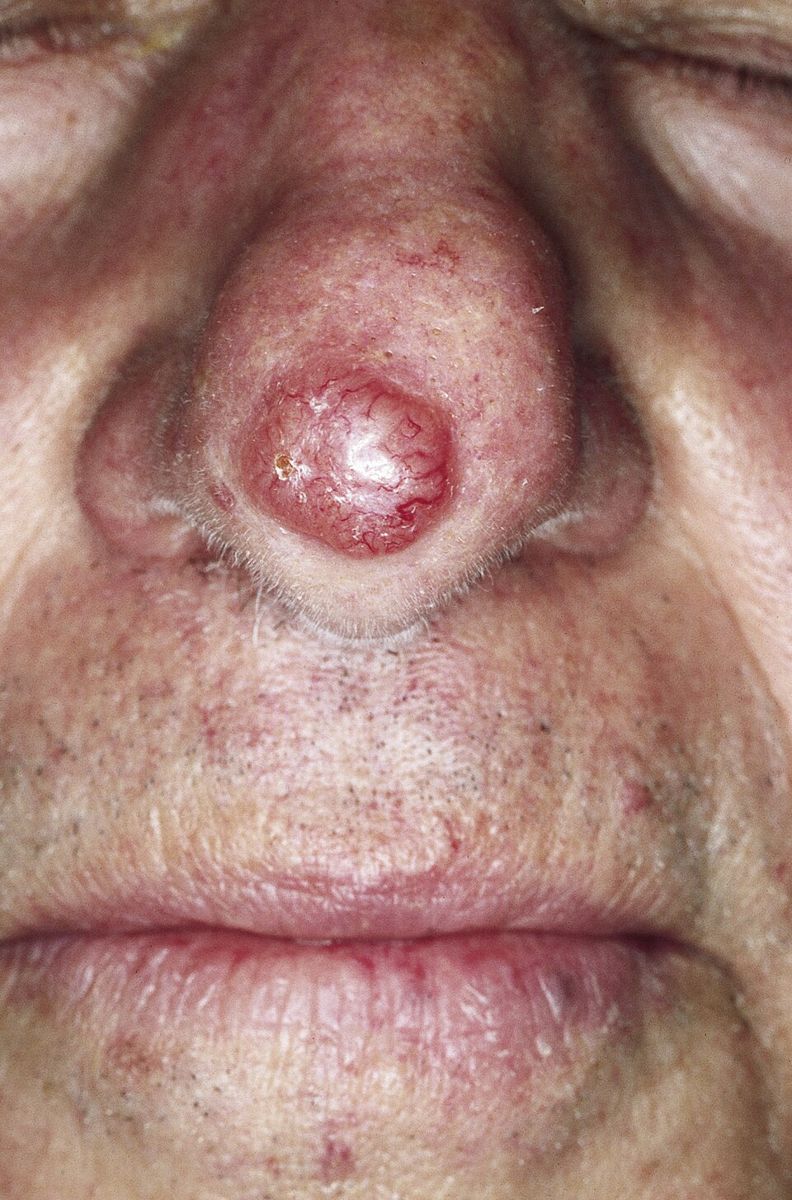
Carcinomas are the most common skin cancers. Basal cell carcinoma grows slowly and locally; squamous cell carcinoma requires faster treatment. Both are effectively treated by surgery when caught early.
Who is it for?
They mainly affect sun-exposed areas (face, ears, scalp, hands, chest), especially after the age of 50.
How it is done
Consultation, biopsy if needed, complete excision with a margin, analysis, and repair of the area if necessary (suture, local flap, skin graft).
Anaesthesia
Usually local anaesthesia.
Recovery
Scar care; regular skin check-ups.
The result
The aim is complete removal of the lesion with the most discreet cosmetic result possible, especially on the face.
Risks
Like any procedure, this one carries risks that are rare but real (infection, haematoma, healing problems, asymmetry, reaction to anaesthesia...). They are explained in detail during the consultation, with written information.
Frequently asked questions
Can a carcinoma come back?
The risk of recurrence is low when excision is complete, but regular skin monitoring is still recommended.
Is the face more delicate?
Yes: reconstruction after excision on the face requires plastic surgery expertise to preserve appearance and function.
Is it reimbursed?
Dr Stroumza-Escoffier is contracted with the French national health insurance: medical procedures are reimbursed at the official rates, purely cosmetic procedures are not.
Where does the procedure take place?
At the practice, 11 rue du Faubourg Saint-Honoré, 75008 Paris. Most procedures are performed under local anaesthesia and take less than 30 minutes.
I live abroad: how should I organise my trip?
Contact the practice by phone or e-mail. An examination in Paris is required; small lesions can often be removed during the same stay, and the laboratory results are sent to you.
See also
Book a consultation
11 rue du Faubourg Saint-Honoré, 75008 Paris · Monday to Friday