Mole screening
What is it?
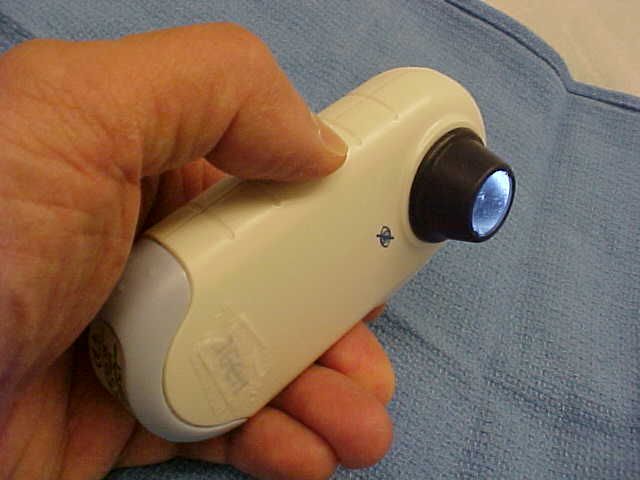
Mole screening means examining the whole skin to find a suspicious lesion. At the practice, the examination is done with a digital dermatoscope, an illuminated magnifier that helps distinguish a benign spot from one to watch, combined with analysis software.
Who is it for?
Anyone with many moles, fair skin, a history of sunburn, a family history of melanoma, or a spot that is changing.
How it is done
Medical history, examination of the entire skin surface, dermatoscopic analysis of the lesions, photographs for comparative follow-up if needed.
Anaesthesia
No anaesthesia: the examination is painless.
Recovery
No downtime: you leave immediately, with advice on self-monitoring and sun protection.
The result
A suspicious lesion is removed and examined under the microscope. A suspicious spot is never destroyed (laser, freezing): it is removed and analysed.
Risks
Like any procedure, this one carries risks that are rare but real (infection, haematoma, healing problems, asymmetry, reaction to anaesthesia...). They are explained in detail during the consultation, with written information.
Frequently asked questions
How often should moles be checked?
It depends on your risk profile: the doctor tells you the right frequency, often once a year for people at risk.
What is the ABCDE rule?
Asymmetry, irregular Borders, uneven Colour, Diameter over 6 mm, Evolution: a spot showing one of these signs should be shown to a doctor.
Is it reimbursed?
Dr Stroumza-Escoffier is contracted with the French national health insurance: medical procedures are reimbursed at the official rates, purely cosmetic procedures are not.
Where does the procedure take place?
At the practice, 11 rue du Faubourg Saint-Honoré, 75008 Paris. Most procedures are performed under local anaesthesia and take less than 30 minutes.
I live abroad: how should I organise my trip?
Contact the practice by phone or e-mail. An examination in Paris is required; small lesions can often be removed during the same stay, and the laboratory results are sent to you.
Book a consultation
11 rue du Faubourg Saint-Honoré, 75008 Paris · Monday to Friday